
The Loyal Saxons
In 782CE, the civilian population of Saxony rose up against a bandit incursion into Saxony lead by the elite of the Frankish Kingdom. In response, Charlemage lead an army into Saxony, and murdered 4,500 civilians at Verden because of their loyalty to the Æsir and their defense of their kin.
By the beginning of 782CE, the Frankish kingdom had been engaged in a thirty-year long campaign of banditry and off-and-on military invasion, attacking civilians with each incursion in order to drive the Saxons into apostasy. That year, a large group of the military elite of the Franks embarked on one such raid.
This one went extraordinarily poorly: not only did the Saxons continue to remain loyal to the Æsir, but the men that the Frankish elite thought would be merely victims fought back, and killed sixty of the Frankish realm's military and social elite, in addition to many lesser-ranked men. This act of self-defense was simply not supposed to happen, according to the royal ideology of the day.
The tyrant Charlemagne was furious and humiliated, and gathered as much of his soldiers as he could into one massive punitive raid into Saxony. The Frankish forces ripped through Saxony, looting and ransacking villages as they went. Traitors amongst the Saxons, some of rank and status seeking to curry favor with the invaders, were assembled and given a demand: to hand over the men who had defended their kith and kin, or face the consequences.
And so the traitors obliged, and the names and locations of the brave defenders were given. And as was the custom of the Frankish despotism, these men were given a choice: decapitation, or apostasy. When faced with the choice between life as a traitor and death as a hero, the brave men who stood fast for the Æsir, their Ancestors, and the Folk made a choice: and so their heads hit the ground of the fields of Verden before their knees did.
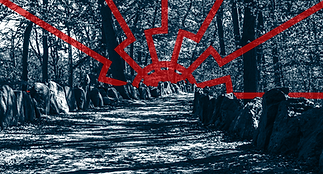
The Carolingian regime's actions at this time horrified many, and would horrify many throughout the centuries to come; others however held the wicked slaughter it as a pious and virtuous act by the Frankish regime. As the 19th-century rolled into the 20th-century, a vigorous debate over the event unfurled in Germany. In 1935, landscape architect Wilhelm Hübotter was commissioned to create a memorial site at Verden to the 4,500 Loyal Saxon heroes. Composed of 4,500 megaliths, each one is a memorial to a great man whose name has been lost to history.
Today, we honor these men for standing firm in the face of hardship, up to and including literal decapitation. They were loyal unto death. Their story tells us the importance of standing up for what is right, but also of the great importance of standing together, and keeping what is good in our hearts and on our lips. The ignominy they suffer is a great dishonor upon them: it is important that we never let such ignobility as namelessness befall the heroes of our Folk.
Hail the Loyal Saxon!